You Were Unstoppable at 11 AM. It's Now 6 PM. Please Stop.

Let's set the scene. It's 11:03 AM on a Tuesday. You've had your coffee. You cleared three blockers before most people finished their commute. You wrote the best paragraph of your pitch deck — the one that genuinely slaps — in under seven minutes. You briefly considered whether you might be a genius.
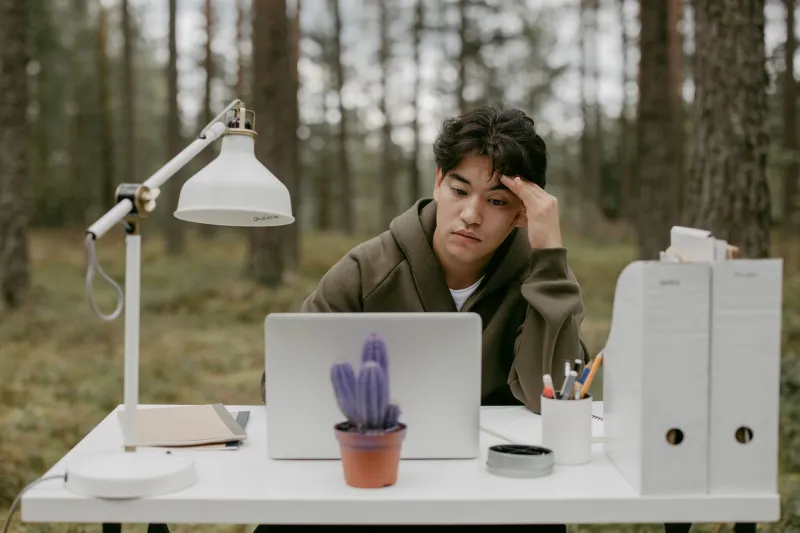
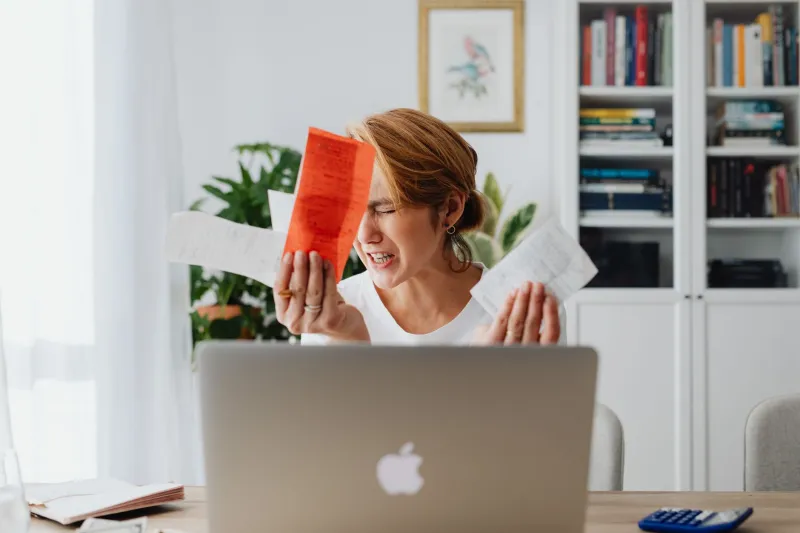
Fast forward to 6:47 PM. You've been staring at the same spreadsheet for forty minutes. You just reread a Slack message four times and still don't know what it says. You typed a reply, deleted it, typed it again, and then closed the tab entirely. The paragraph you're attempting to write for your investor update sounds like it was generated by a sleep-deprived chatbot — which, in a sense, it was.
This is not a personal failing. This is chronobiology, and it is absolutely roasting you.
Your Brain Has Office Hours (And It Did Not Consult Your Calendar)
Here's the uncomfortable truth that no productivity guru selling a 5 AM morning routine wants you to know: your cognitive performance is not a flat line. It's a curve — and for most people, that curve peaks somewhere between mid-morning and early afternoon, then begins its slow, dignified descent into the cognitive equivalent of a dial-up modem.
Researchers studying circadian rhythms have found that alertness, working memory, and executive function all follow predictable daily patterns tied to your internal biological clock. For the majority of adults — regardless of whether they identify as "morning people" — peak mental performance tends to land in the late morning hours. After lunch, there's a well-documented post-afternoon dip, typically between 1 and 3 PM, where even simple decisions feel like lifting furniture. Things pick up slightly in the late afternoon before dropping off again as evening approaches.
Founders, of course, respond to this information by scheduling their most important calls at 4 PM and then wondering why they agreed to a terrible contract clause they definitely noticed but couldn't summon the energy to fight.
The Spite-Fuel Problem
The real issue isn't that founders don't know they're tired. It's that they've confused being physically present at a desk with being mentally operational. There's a specific flavor of late-afternoon hustle that runs entirely on spite, ambient anxiety, and the ambient guilt of not having done enough. It feels like productivity. It has the shape of productivity. But the output — if you're being honest — is mostly calendar reshuffling, reply-all emails that didn't need to happen, and seventeen browser tabs you'll never revisit.
This is phantom productivity, and it is the founding community's most cherished delusion.
The danger isn't just wasted time. It's that you're making real decisions — about hiring, spending, strategy, partnerships — with a brain that is functionally running on fumes and leftover cortisol. Studies on decision fatigue, a concept popularized by research into judges, parole boards, and yes, corporate executives, consistently show that the quality of decisions degrades as the day progresses. Your 6 PM self is not the same decision-maker as your 10 AM self. They share a body and a LinkedIn profile, but cognitively, they are different people — and one of them should not be signing anything.
The Honest Task Audit Nobody Wants to Do
The fix isn't to grind harder or chug a third espresso and push through. The fix is embarrassingly simple: stop doing your high-stakes work when your brain has already clocked out.
Here's a rough framework that doesn't require a productivity app subscription:
Peak hours (late morning, roughly 9 AM–12 PM for most people): This is your protected window. Deep work only. Writing, strategic thinking, creative problem-solving, reviewing contracts, making decisions with long-term consequences, building anything that requires you to hold multiple variables in your head simultaneously. Guard this time like it is your most valuable resource, because neurologically, it is.
Mid-afternoon slump (1–3 PM): Stop fighting it. This is the biological siesta window that most of the world outside the US has quietly honored for centuries. Use it for low-cognitive tasks: responding to routine emails, scheduling, administrative work, or — radical concept — a twenty-minute rest. Research consistently shows that even a brief nap or eyes-closed rest during this window restores alertness measurably. You don't have to tell anyone.
Late afternoon recovery (3–5 PM): A modest cognitive rebound typically occurs here, making it decent for collaborative work, lighter meetings, or tasks that benefit from loose associative thinking — brainstorming, reviewing creative work, catching up with your team.
Evening (5 PM onward): Unless you are a confirmed night owl with genuine chronotype data to back it up, this window is for winding down, not cranking up. Sending your most important emails here is a choice, and it is not a good one.
How to Actually Protect Your Peak Without Alienating Everyone
The practical challenge, of course, is that the business world has not organized itself around your chronobiology. Investors want 9 AM calls. Employees ping you at 11. Your co-founder considers 10:30 PM a perfectly reasonable time to "quick chat."
A few things that actually work:
Block your peak hours on your calendar and label them something boring. "Deep Work" gets ignored. "External Meeting" gets respected. This is manipulative and effective.
Batch your meetings into the afternoon. Yes, meetings are cognitively taxing, but they're a different kind of taxing — more reactive than generative. Your peak hours are too valuable to spend nodding along to status updates.
Create a daily task list sorted by cognitive demand, not urgency. High-complexity items go in the morning slot. Urgent-but-mindless items go in the afternoon. Be honest about which is which. Replying to a routine customer inquiry is not a morning task, no matter how many times it hits your inbox.
Stop glorifying the 6 PM grind. The badge of honor for working late is a cultural artifact, not a performance indicator. Output quality matters. The hour on the clock does not.
A Gentle Suggestion for Your Future Self
The next time you find yourself at your desk at 7 PM, squinting at a document you've read six times without absorbing a single sentence, do yourself a favor. Close the laptop. Go outside for twelve minutes. Drink water like a person who respects themselves.
You peaked at 11 AM. It was genuinely impressive. The meeting you crushed, the decision you made with clarity, the message you wrote that actually landed — that was real, and it happened because your brain was firing at full capacity.
The version of you currently running on spite and cold brew is doing its best. But it deserves a rest, not another deliverable.
Tomorrow, 11 AM will come around again. Be ready for it.