Fine, Go to the Networking Event. But Here's How to Actually Make It Worth Your Time.
There is a specific kind of dread that arrives approximately forty minutes before a networking event. You're dressed. You've got cards. You've mentally rehearsed your thirty-second pitch. And you are already fantasizing about being home on your couch.
This feeling is valid. Most networking events are, structurally, not great. They are designed around the assumption that if you put ambitious people in a room with alcohol and name tags, something valuable will happen. Sometimes it does. Usually it doesn't.
But here's what nobody says out loud: the concept of networking is not the problem. The format is the problem. And if you're willing to work around the format, the room full of people you're dreading is actually full of potential collaborators, future customers, and people who will refer you to the exact investor you've been trying to reach for six months.
You just have to stop playing the game the way everyone else plays it.
Know Your Networking Archetype (Because You're Not All of Them)
Here's the first thing productivity content never tells you about networking: different people are genuinely good at different parts of it, and trying to perform someone else's archetype is exhausting and counterproductive.
Broadly, founders tend to fall into one of a few modes:
The Connector naturally thinks in introductions. They're not pitching themselves; they're mentally cataloging who in the room should meet whom. If this is you, lean into it hard — connectors are remembered and valued far longer than pitchers.
The Deep Diver is terrible at working a room but extraordinary in a single forty-five-minute conversation. If this is you, stop trying to collect fifteen business cards and instead find one or two people to actually talk to. Quality of conversation over quantity of contacts, every time.
The Follow-Upper isn't the most charismatic person in the room but is meticulous about what happens after. They send the email the next morning. They remember the detail from the conversation. They're the ones who actually convert networking into relationships. If this is you, the event itself matters less than your post-event system.
The Host would rather organize the dinner than attend the mixer. (More on this in a minute.)
Figuring out which one you are — and doing that instead of performing a generic version of "networking" — will immediately make the whole thing less miserable.
Stop Attending. Start Hosting.
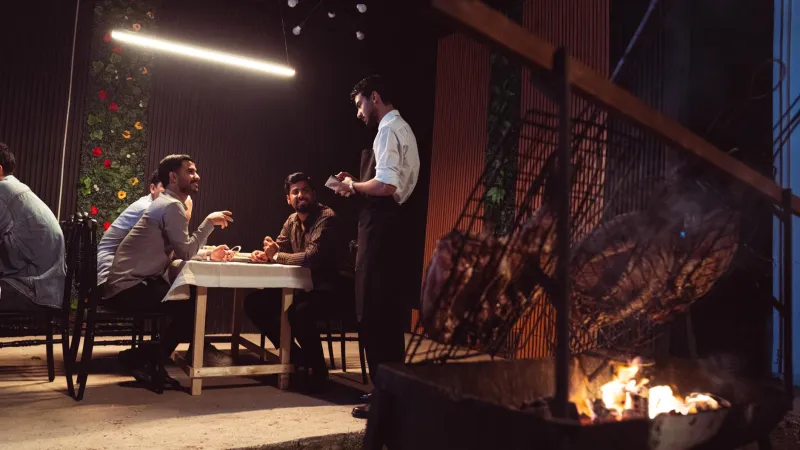
This is the single most underrated move in founder networking, and it's almost embarrassingly simple: instead of going to other people's events and competing for attention in a room of a hundred people, invite eight people to dinner.
A micro-dinner — six to ten people, curated by you, at a restaurant or even your home — accomplishes in one evening what a dozen mixers cannot:
- Everyone at the table actually meets everyone else at the table
- Conversation goes deeper because it's not interrupted by someone scanning the room over your shoulder
- You are automatically positioned as a connector and organizer, which carries more social capital than any elevator pitch
- The follow-up is natural because you shared a meal, not just a handshake
"I stopped going to startup events and started hosting a monthly dinner for eight founders in my city," says Keisha, who runs a fintech startup in Charlotte. "In two years, that dinner has produced two co-investor intros, one hire, one acqui-hire conversation, and four genuine friendships. No event I ever attended did a tenth of that."
You don't need a budget. You need a reservation and a thoughtful list.
The Art of the Non-Terrible Introduction
When you do attend events — and sometimes you should, because serendipity is real — the thirty-second pitch is not your friend. Nobody at a cocktail hour wants to be pitched. They want to be interested.
Instead of leading with what you do, lead with something that creates a real exchange:
- "What's the most unexpected thing about your industry that outsiders never understand?" (People love to explain their expertise.)
- "What problem are you trying to solve right now that you haven't figured out yet?" (This gets to genuine need faster than any pitch.)
- "How did you end up in this room tonight?" (Context tells you everything.)
The goal of the first five minutes is not to deliver information. It's to find out whether this person is worth the next fifteen minutes of your evening. Treat it like the world's lowest-stakes first date, not a sales call.
The Follow-Up That Doesn't Feel Like Spam
Here is the graveyard of networking: the LinkedIn connection request with zero message, sent twenty-four hours after meeting someone, followed by absolute silence forever.
If you met someone worth following up with, follow up like a human being:
Reference something specific. "Loved what you said about the unit economics problem in your space" is infinitely more powerful than "Great meeting you!" It proves you were actually listening.
Offer something before you ask for anything. An article relevant to their problem. An introduction to someone in your network. A resource you mentioned in conversation. Value first, ask never (or much later).
Be direct about what you want, eventually. Vague "let's connect" emails waste everyone's time. If you want a thirty-minute call to explore a partnership, say that. If you want an intro to someone they know, ask cleanly. Clarity is a form of respect.
Do it within 48 hours. The half-life of a networking conversation is short. After 72 hours, you are basically a stranger again.
The One Room That Actually Works
If you're going to attend events, be selective about which ones. The best networking for founders tends to happen in rooms with:
- Shared context — industry-specific events where everyone already speaks the same language
- Smaller attendance — under fifty people dramatically increases the chance of real conversation
- A reason to be there beyond networking — panels, workshops, demos, dinners; anything with a purpose beyond the mixer itself
- Curation — events where someone has thought carefully about who's in the room
Generic startup mixers in hotel lobbies with open bars? Usually a wash. A founder roundtable with fifteen people and a specific topic? Almost always worth your evening.
The Actual Point
Networking, stripped of the performance and the awkward small talk and the badge-scanning, is just meeting people who might matter to you and whom you might matter to. That's it. That's the whole thing.
The format most events use to facilitate this is genuinely not great. But the underlying goal is completely worth pursuing.
Go to the event. Find the one or two people worth talking to. Talk to them like a person. Follow up like a person. Host your own dinner.
And if none of that works, at least you got out of the house on a Tuesday.
That counts for something.